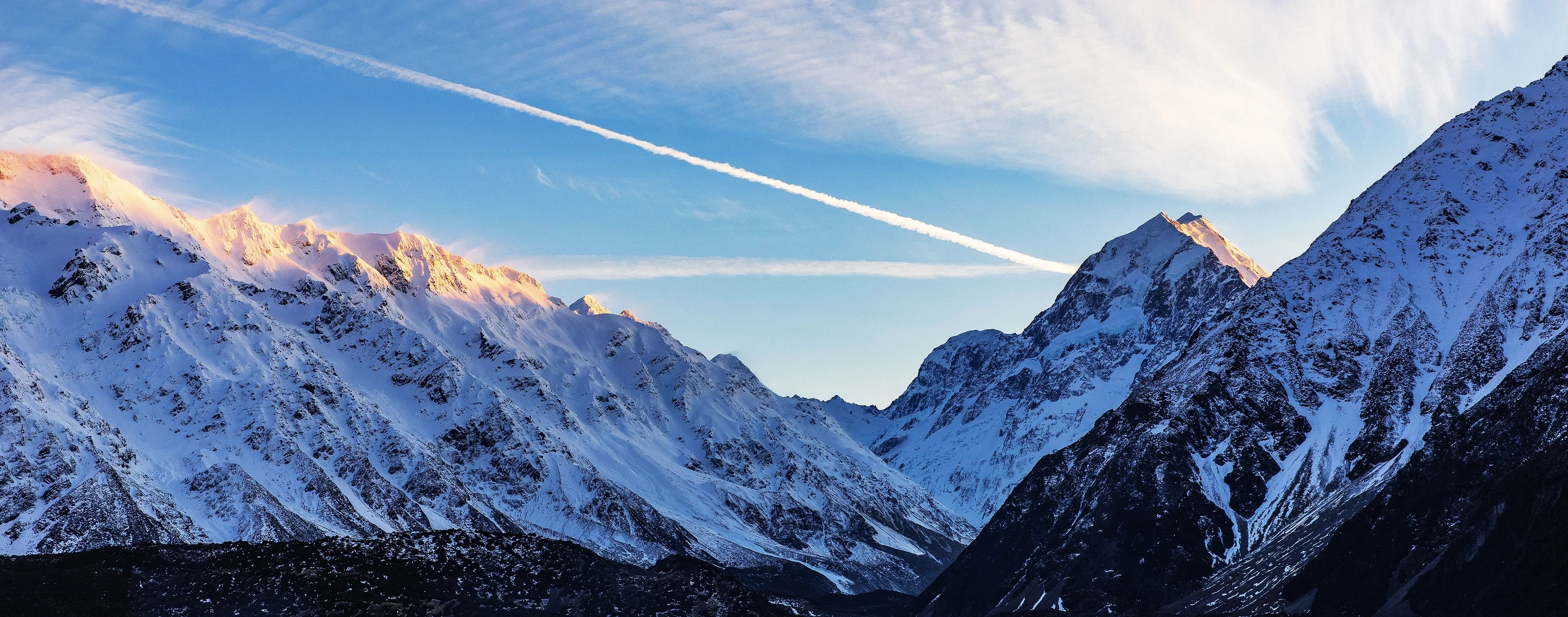
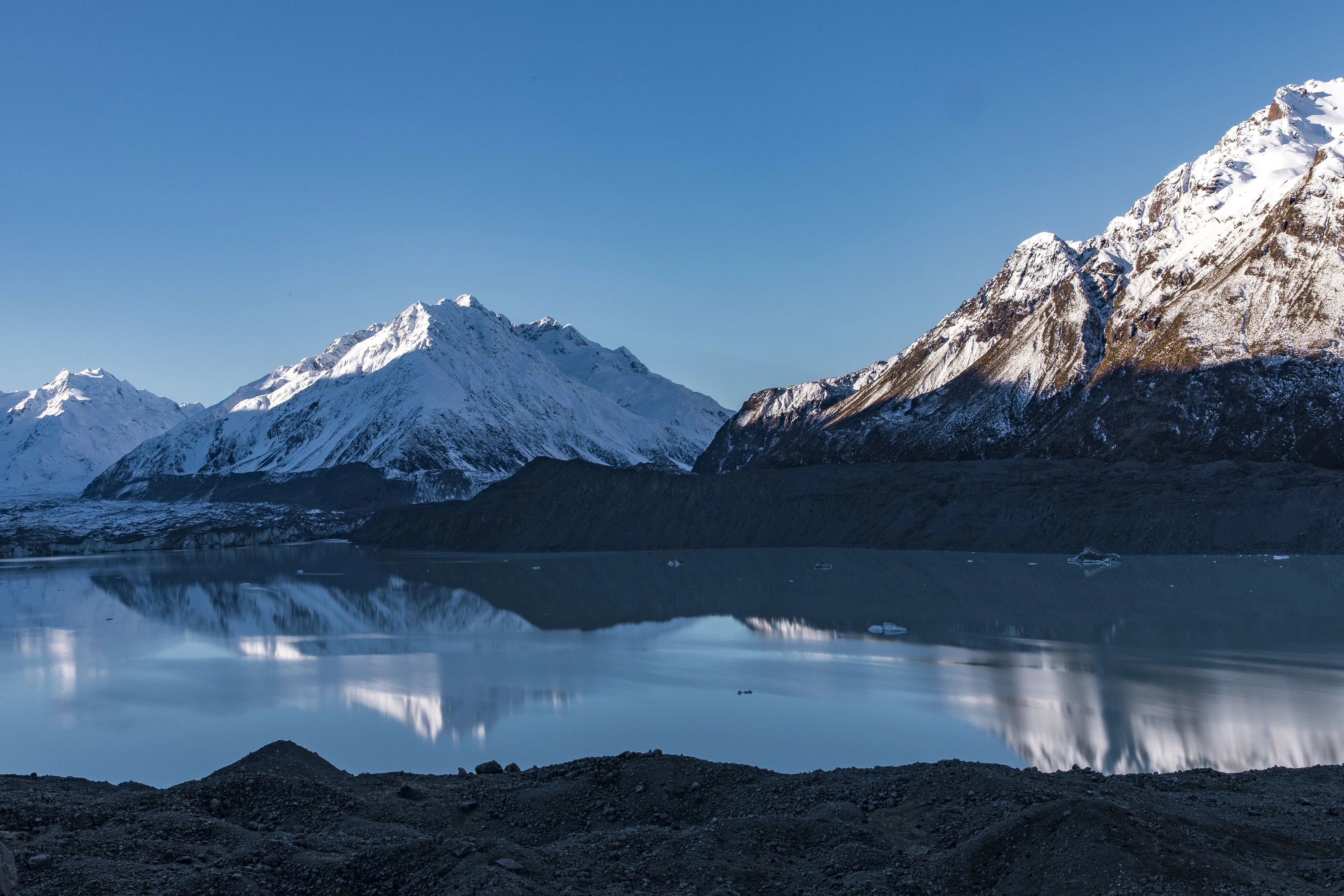
 Mount Cook reflected in a glacial lake.
Mount Cook National Park is held within the folds of the Southern Alps. Nineteen peaks rise above 3,000 metres, while the Tasman, Hooker and Mueller glaciers establish a scale that feels almost mythic. The mountain is not a distant backdrop, and the glaciers are not static white decoration. Water wakes between snow lines and tongues of ice, moving down the valleys, while cloud and wind travel back and forth along the rock faces, as if the land were still writing itself slowly.
Within Ngāi Tahu tradition, Mount Cook is an important ancestral presence. The mountain belongs not only to geography, but to a community's identity, memory and spiritual order. The parallel Māori and English names feel like a door left partly open, reminding us that this land already had its own stories; it did not gain meaning only when it was mapped or written into travel accounts.
That is why the most compelling identity of Mount Cook does not come from the snow peak alone. A clear and quiet distance remains between the mountain, the lake, the valley and human life. It has not been packaged simply as a landscape for consumption. Its character has grown slowly through natural conditions, cultural memory and long-term protection.
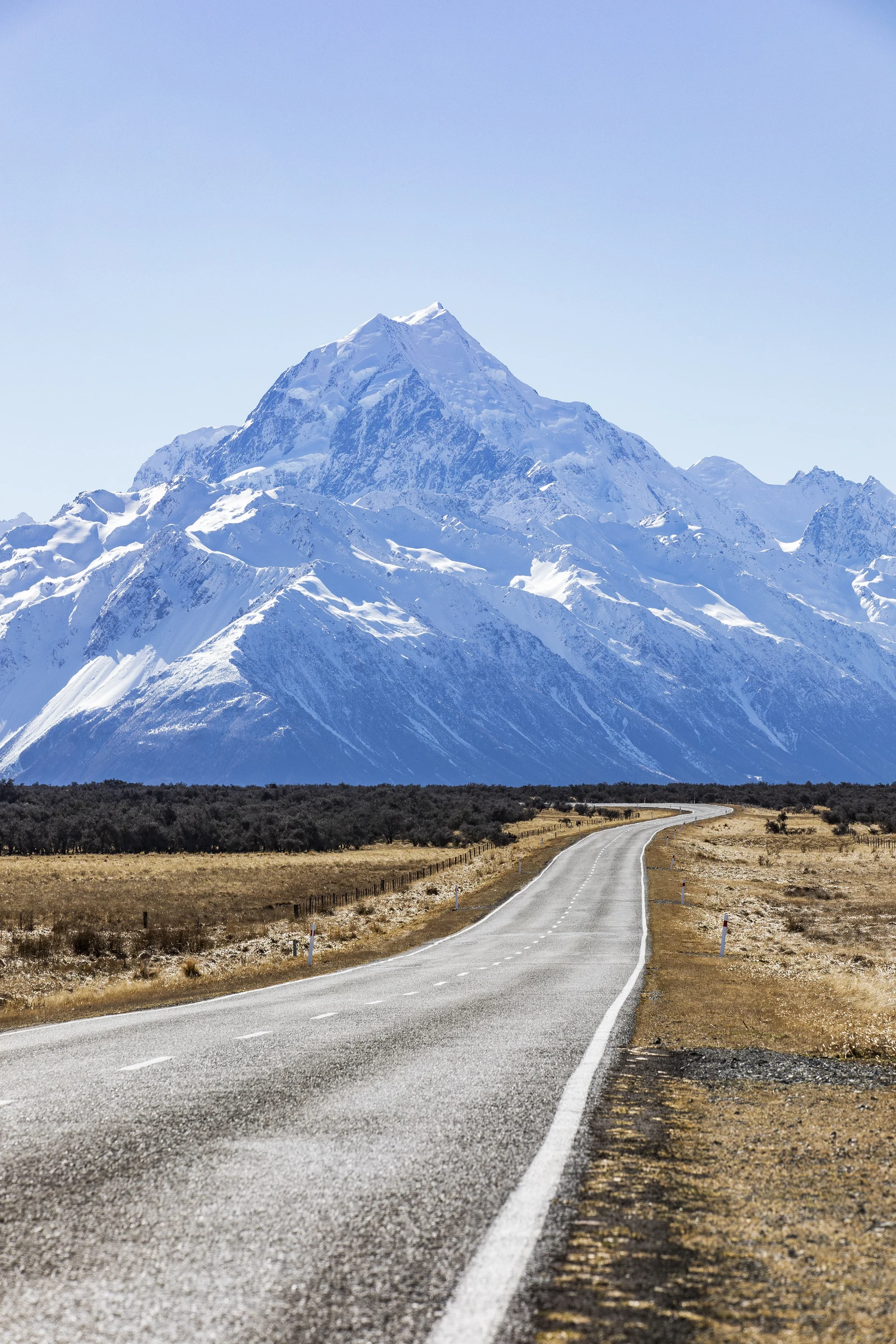
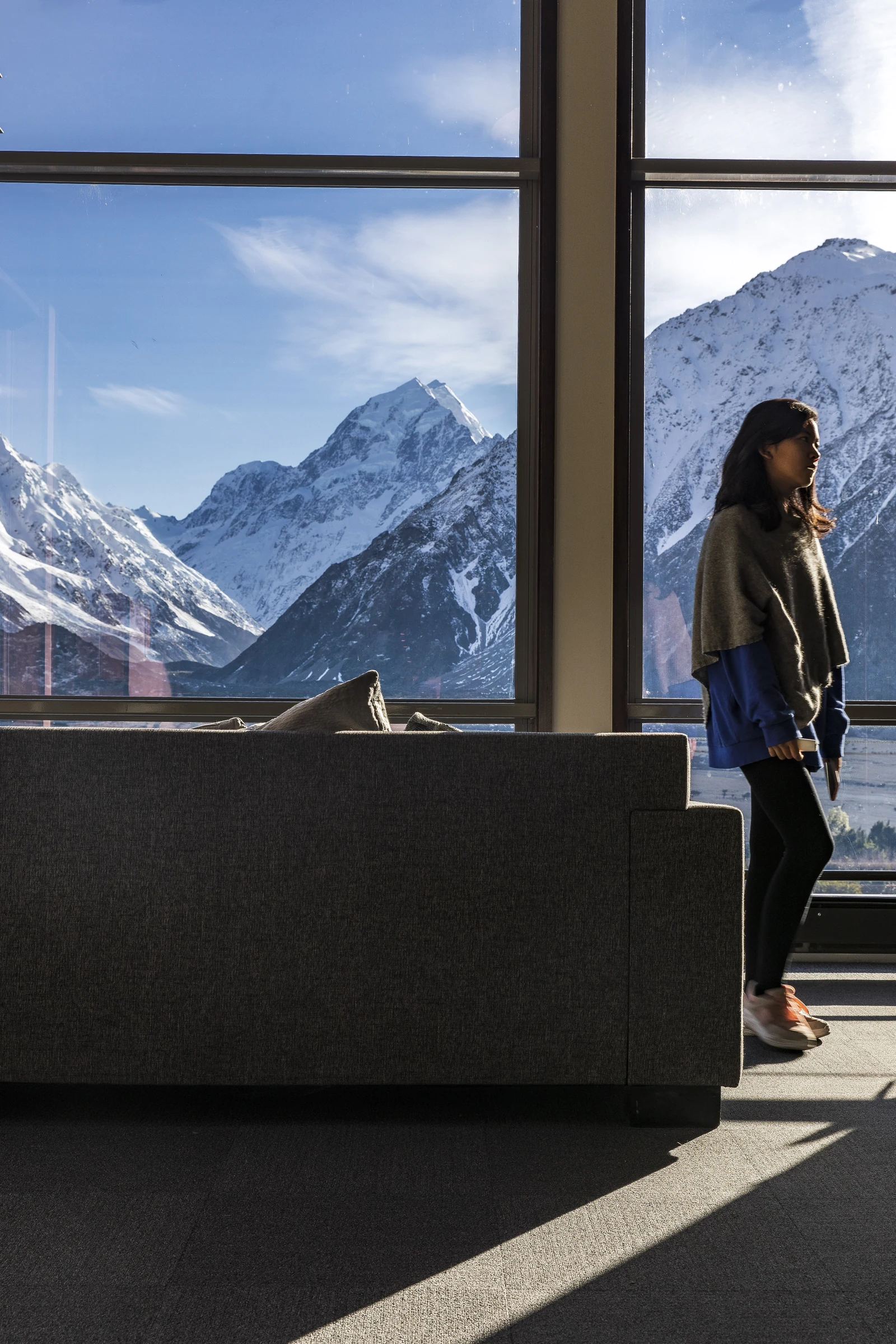
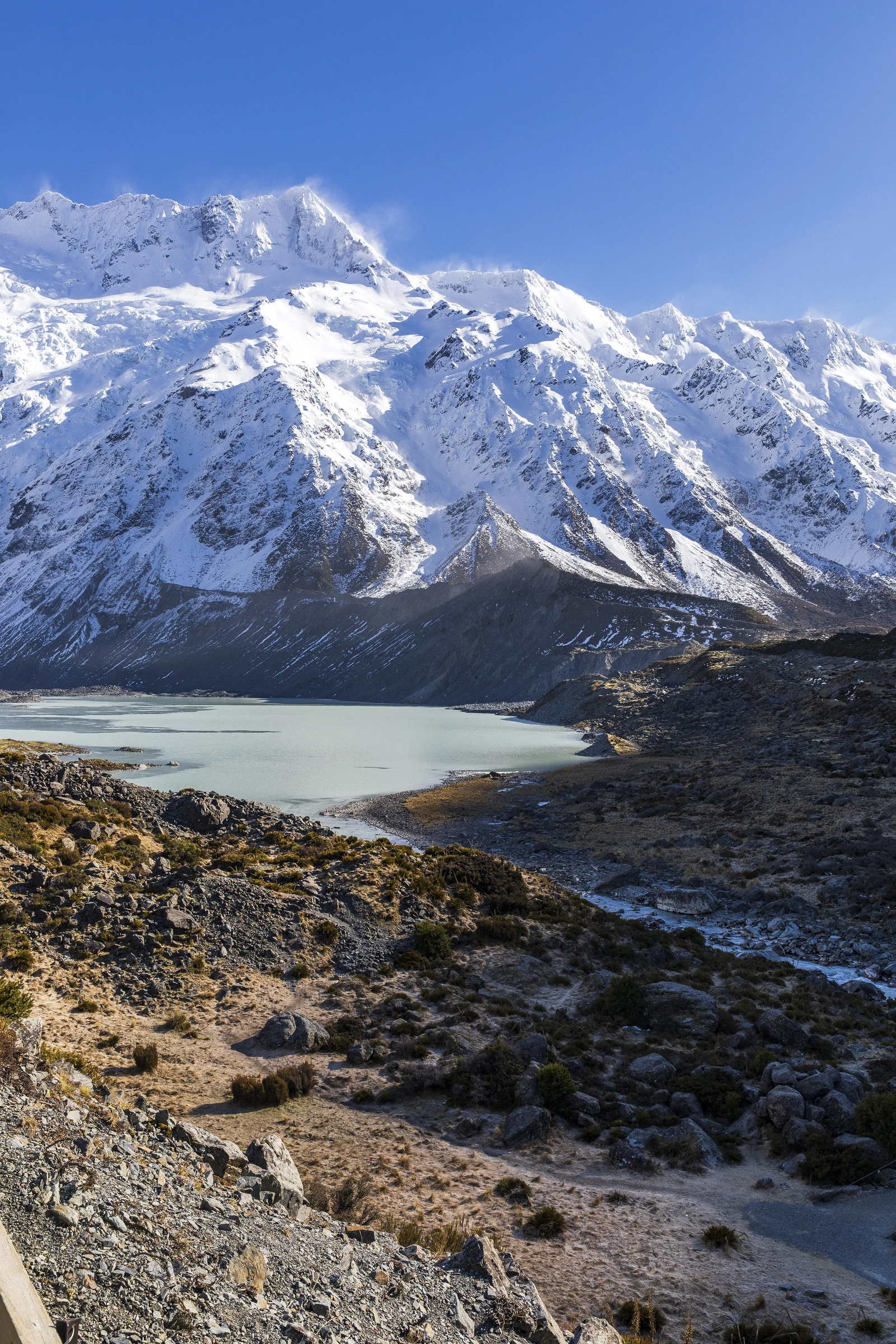
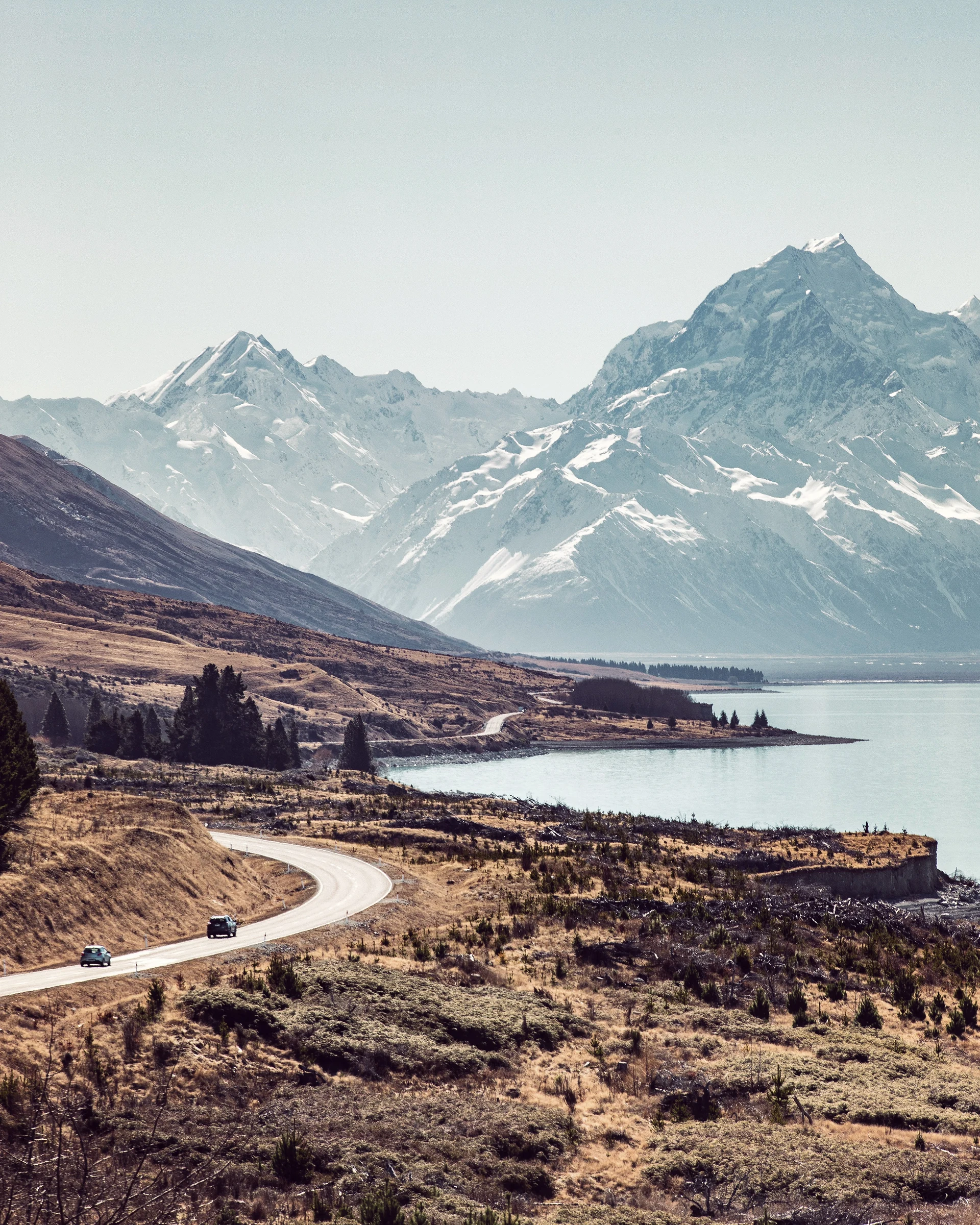
The “discovery” of Mount Cook followed two parallel paths. One had long existed in Ngāi Tahu oral tradition: the mountain was known, respected and placed within a complete cultural order. The other entered European surveys and exploration records later. In the mid-nineteenth century, explorers began recording valleys, glaciers and routes towards the mountain as geographic knowledge. Before that, the mountain was already there, quietly receiving the seasons and time.
Mountaineering history turned human attention towards higher and more dangerous ground. In 1882, W. S. Green, Emil Boss and Ulrich Kaufmann climbed close to the summit; on Christmas Day in 1894, Tom Fyfe, George Graham and Jack Clarke completed the first ascent of Mount Cook. Their names remain like footprints in the wind, carrying both the light of adventure and a darker humility: the mountain's value has never depended on who conquered it. Every ascent must listen to snow, ice, rock and weather.
I have hiked here many times, and have gradually come to feel that the best way to know Mount Cook is not necessarily to reach its highest point. The Hooker Valley Track begins at White Horse Hill, passing through alpine grassland, glacial traces and swing bridges before arriving at Hooker Lake. For anyone entering the high country for the first time, it may be one of the most welcoming half-day walks: it does not ask you to prove anything, only to learn how to walk, pause and look before deciding whether to go farther.
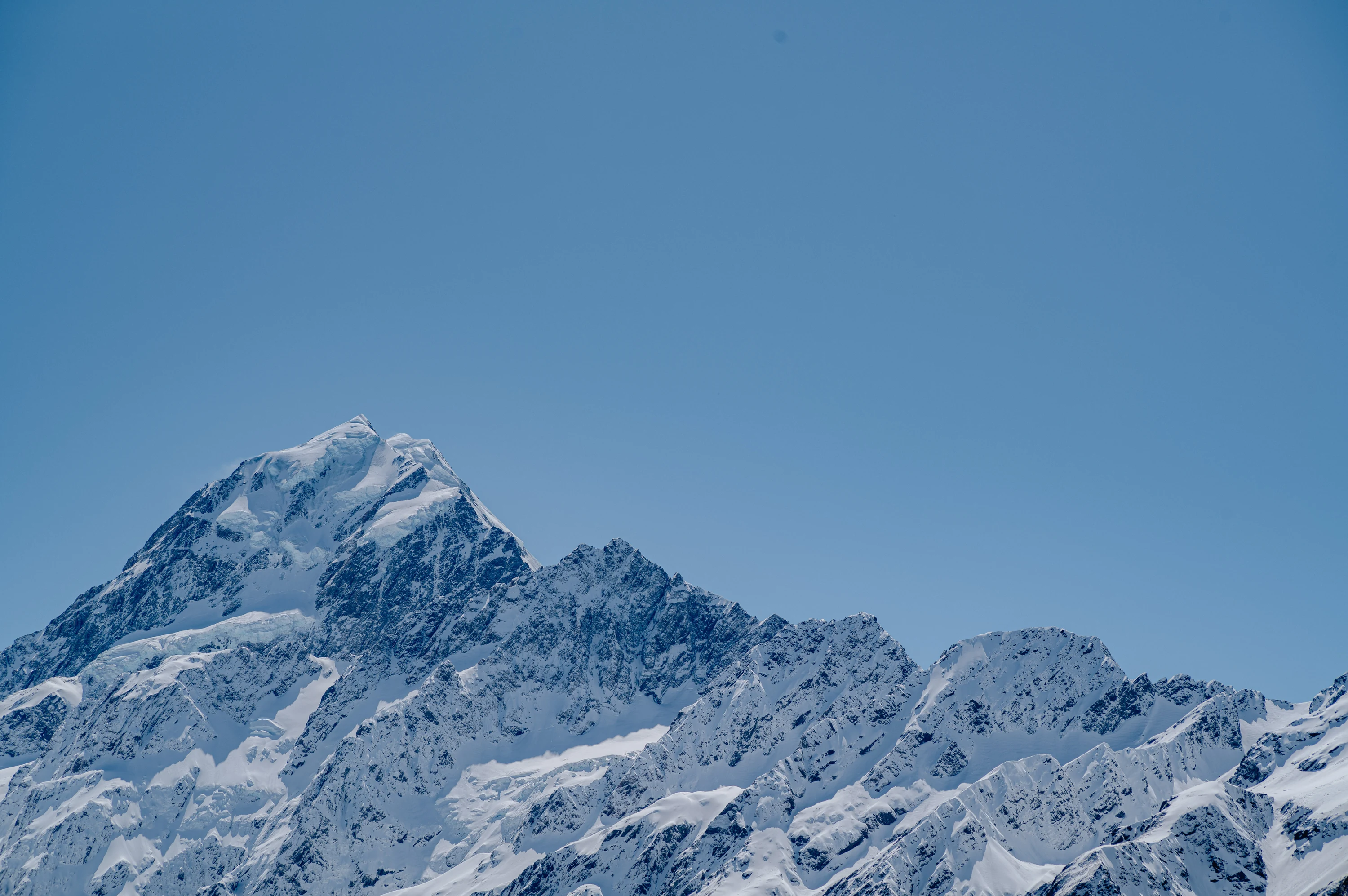 The Southern Alps hold the valley in a scale larger than the visitor.
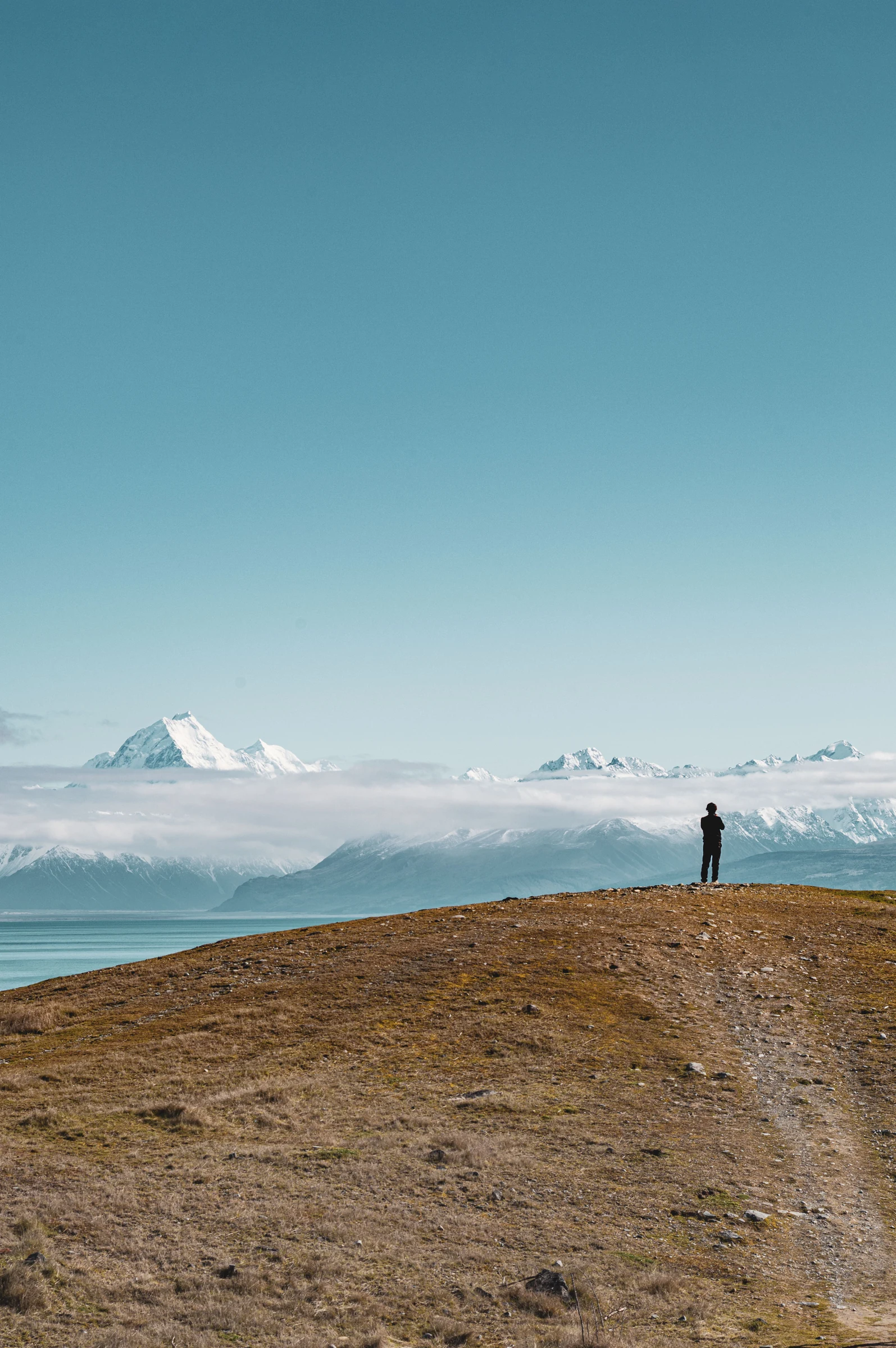
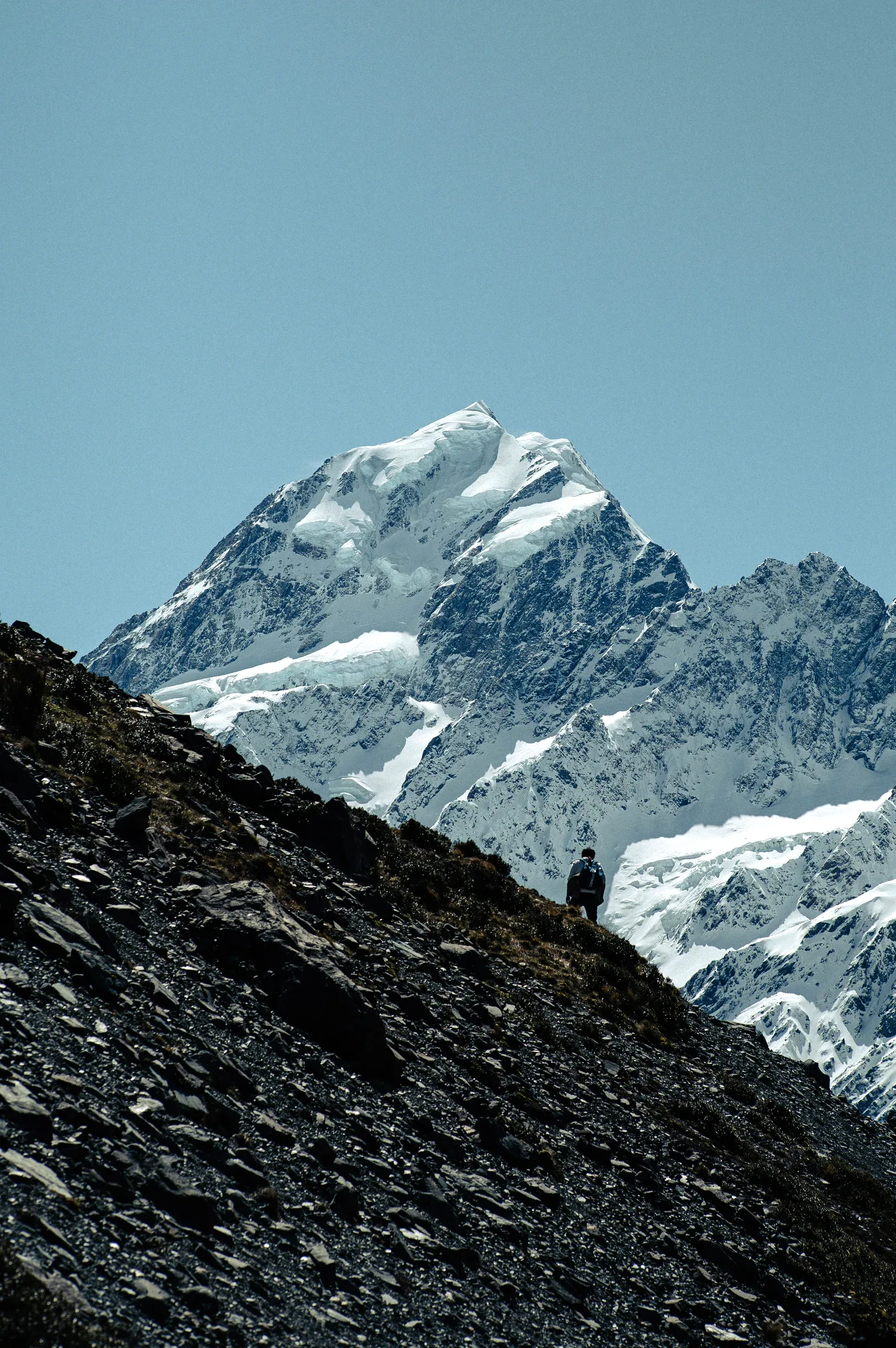
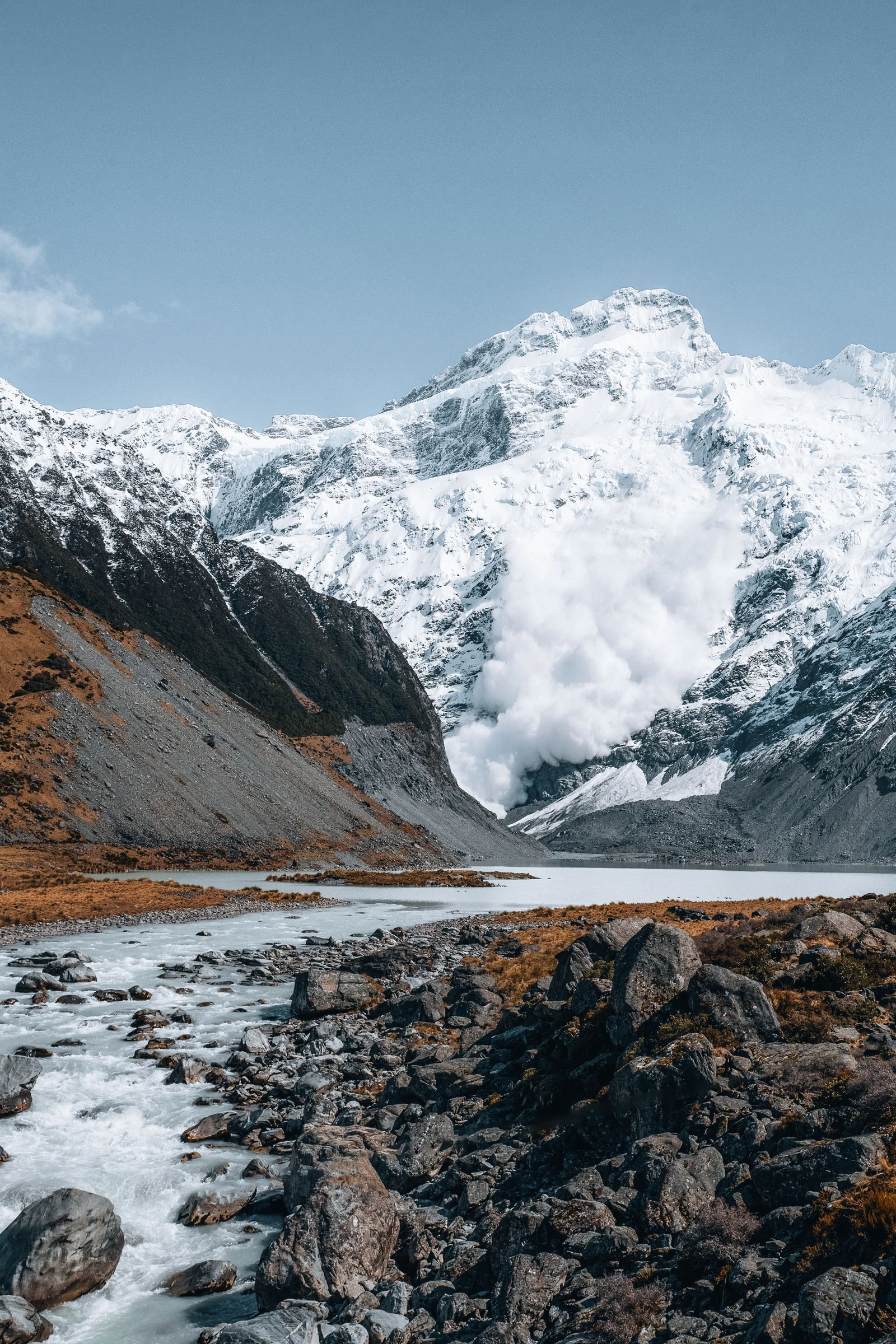
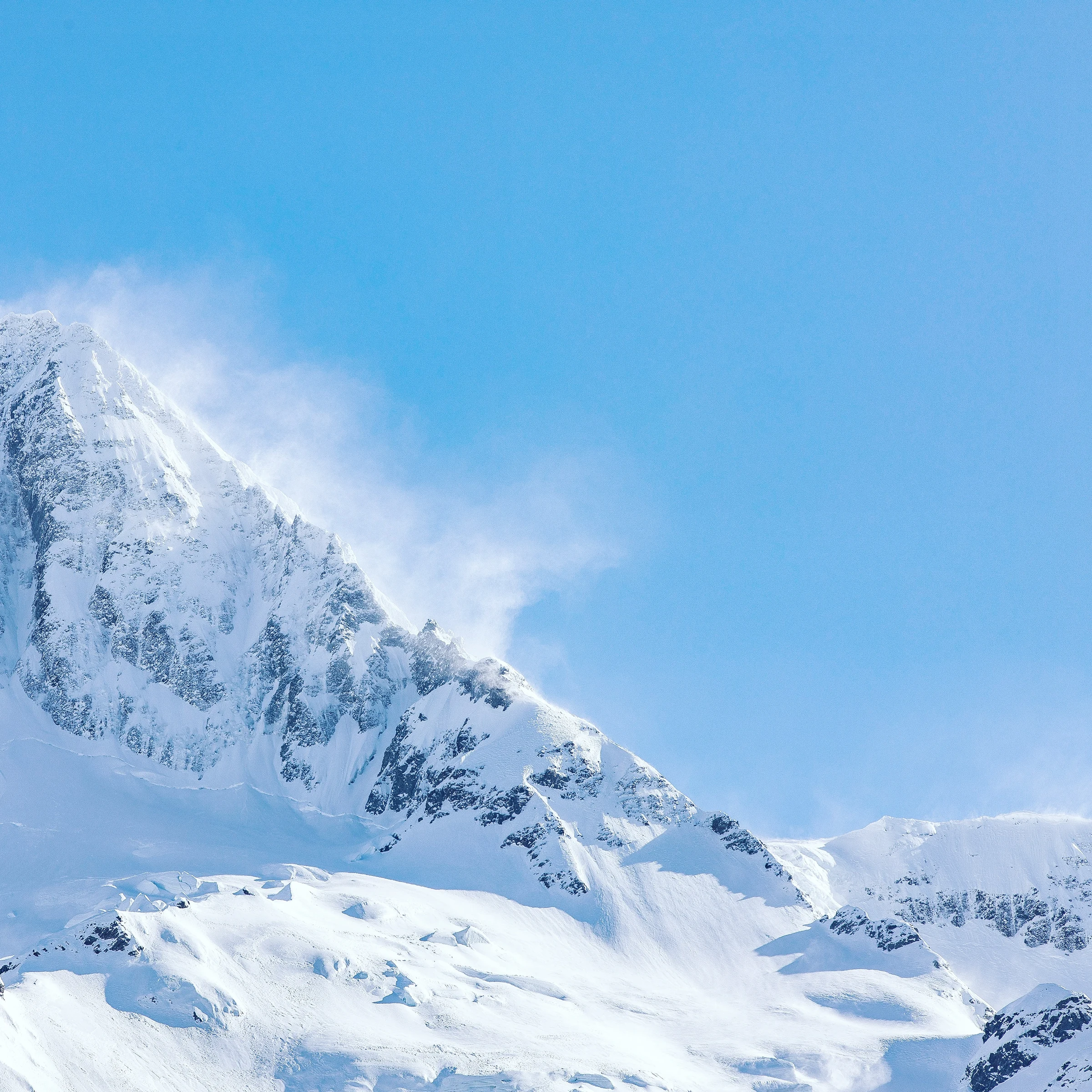
New Zealand's approach to conservation has surprised me less because there are no human traces, and more because human activity is placed within such a clear and restrained boundary. Mount Cook National Park forms part of the Te Waipounamu South West New Zealand World Heritage Area. Roads, visitor centres, tracks, swing bridges and viewing points bring people close to the valley, yet rarely compete with nature for visual attention. They operate like a quiet etiquette, showing us how to enter, where to stay, and when to draw our steps back.
Tracks, boardwalks and bridges do more than make a journey convenient. They carry some of the weight of human presence: leading visitors to places where the landscape can be seen without repeatedly trampling fragile vegetation; reducing casual wandering through clear routes; placing necessary reminders near glacial lakes, rivers and snow; and keeping buildings and facilities low enough to return the valley's original scale to itself. Conservation is therefore not a slogan at the entrance. It is an everyday discipline made through materials, boundaries, maintenance and every turn in the path.
Here I think of the disorder often found in the development of domestic scenic areas. We enclose a landscape, add elements that conflict with nature, and manufacture countless forms of so-called sensory stimulation. Yet nature does not need endless amplification, and a visit does not need a constant supply of new excitement. A mature park lets roads, capacity, maintenance and safety serve the land itself instead of turning the valley into a stage for consumption. We do not come to nature so that it can accommodate every desire; sometimes the most generous relationship is knowing when to pause and step back, leaving what matters most in its original place.
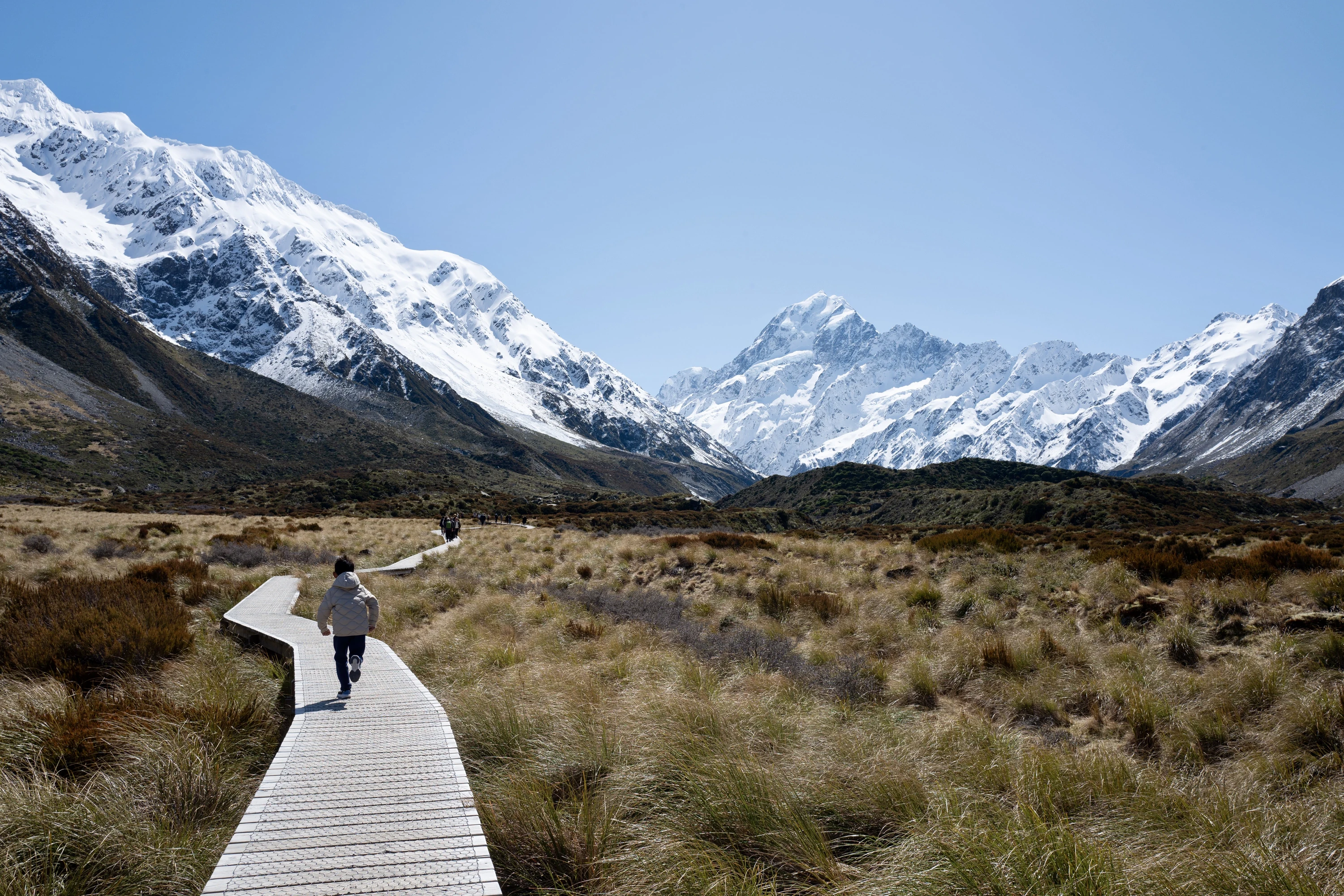 A quiet boardwalk carries the visitor through a valley larger than the route.